Every system you run holds a partial view of the same person, and fraudsters exploit exactly that gap. Zingg resolves every record into one identity graph, on your own warehouse.
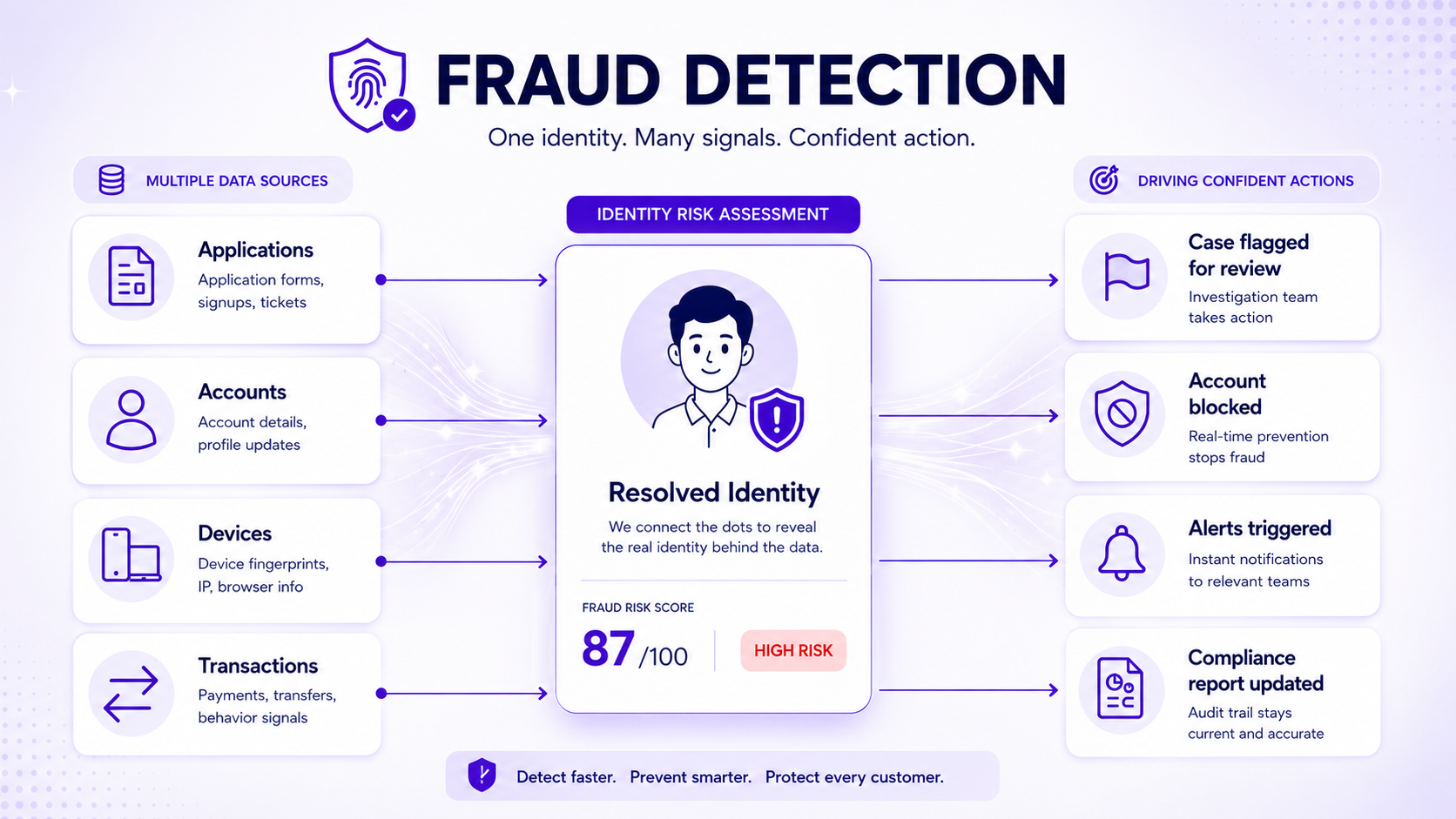
Most fraud stacks bolt a scoring model onto whatever data happens to be in one table. That model can only see what's in front of it: a single account, a single application. It has no way to know that account shares a phone number with three others already flagged, or that this "new" applicant is a repeat offender under a slightly different name. The fraud is real, but it stays invisible until the records are resolved into one entity.


.png)

