Semantic Layer Starts With One Resolved Entity

The same customer often lives in five systems under three different names. A semantic layer can define "customer" perfectly and still return conflicting answers if that identity was never resolved first.
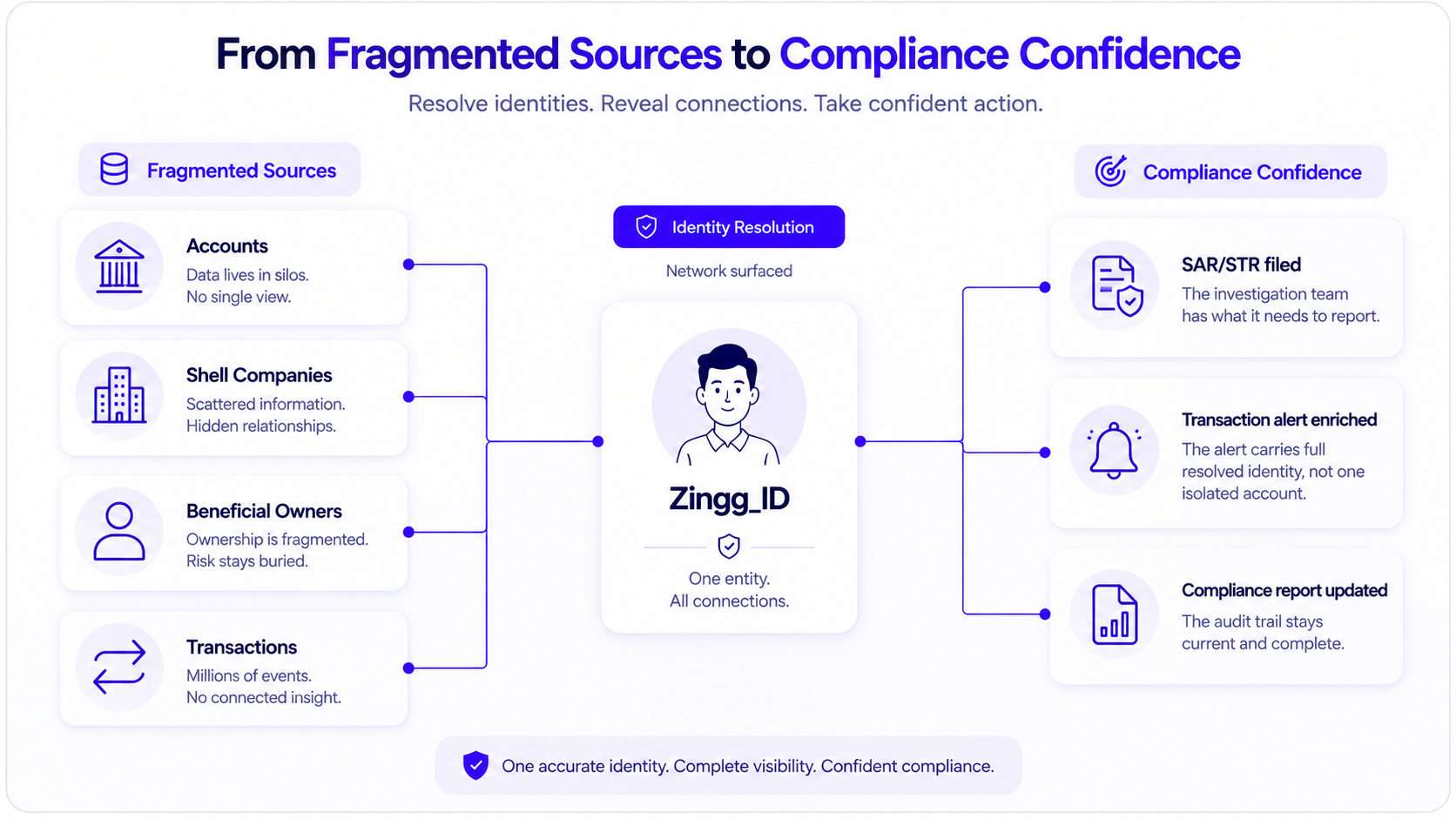
One Resolved Entity, Not Scattered Records
Zingg resolves fragmented records into one entity before any metric is defined on top of it.
Agents That Don't Act on Duplicates
An agent that can't tell records apart acts on each independently, multiplying errors at automation speed. A resolved entity stops that at the source.
Runs on
Your Infra-structure
Zingg runs directly on Spark or Snowflake, so your data never leaves your premises.

Why a Semantic Layer Can't Fix Fragmented Identity

A semantic layer defines what "revenue per customer" means, but it can't tell you that "Acme Inc" and "Acme Incorporated" are the same customer. That's an entity resolution problem, not a metrics problem, and it's why analytics built on ungoverned identity produce conflicting numbers even when the metric definitions are correct.

Where the Identity Layer Fits

BI Dashboards
Metrics built on one resolved customer, not duplicates
AI Agents & RAG
Agents act on one resolved record instead of several duplicates
Any Entity Type
Customers, suppliers, patients, citizens, or products